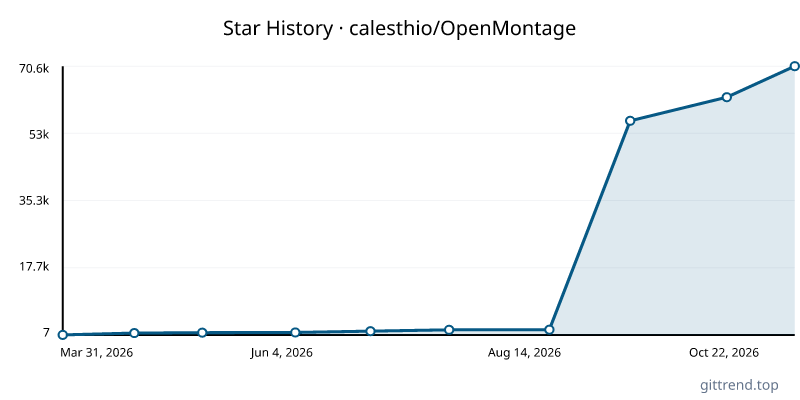
Overview
OpenMontage is the world's first open-source, agentic video production system, designed to transform your AI coding assistant into a comprehensive video studio. It empowers users to describe their desired video content in plain language, with the system's agents handling the entire production lifecycle – from research and scripting to asset generation, editing, and final composition. This innovative platform offers a robust solution for creating both image-based animations and "real video" productions by leveraging open-source workflows and free stock footage.
Key Features
- Agentic Production Pipelines: Features 12 distinct production pipelines, each meticulously designed to handle specific video creation needs.
- Extensive Tool & Skillset: Boasts over 100 integrated tools and more than 700 agent skill and production-knowledge files, ensuring a wide range of creative possibilities.
- True Video Creation: Capable of producing actual video content by sourcing and editing free stock footage and open archives, going beyond simple image animations.
- AI Coding Assistant Integration: Seamlessly integrates with AI coding assistants like Claude Code, Cursor, Copilot, and Codex, allowing users to leverage their existing tools.
- Reference Video Input: Enables users to start productions by providing a reference video, which the agent analyzes for transcript, pacing, scenes, keyframes, and style to generate relevant concepts.
- Backlot Live Storyboard: Offers a real-time, local storyboard that visualizes the production process, including asset generation, script development, and approval gates, providing unprecedented transparency.
- Cost Transparency: Provides honest tool paths and cost estimates before production begins, with detailed breakdowns of provider decisions and expenditure.
- Free Tier Capabilities: Offers significant functionality even without paid API keys, including Piper TTS for narration, access to Archive.org and NASA footage, Remotion and HyperFrames for composition, and FFmpeg for post-production.
Typical Use Cases
- Explainer Videos: Generate animated or real-footage explainers on complex topics, from scientific concepts like neural networks and quantum computing to historical events and abstract ideas.
- Documentary Montages: Create compelling short documentaries or tone poems using curated stock footage and archival material, often with an elegiac or evocative style.
- Product Showcases & Promos: Design engaging product launch teasers, promotional videos, and transformation films that highlight features and benefits.
- Cinematic Trailers & Shorts: Produce short films, trailers, and animated shorts with unique visual styles, ranging from sci-fi to Pixar-esque animations.
- Educational Content: Develop visually rich content for educational purposes, breaking down subjects like CRISPR, black holes, or city life into accessible video formats.
- Creative Visualizations: Transform data, ideas, or prompts into dynamic visual narratives, such as data-driven explainers or imaginative explorations of fictional worlds.