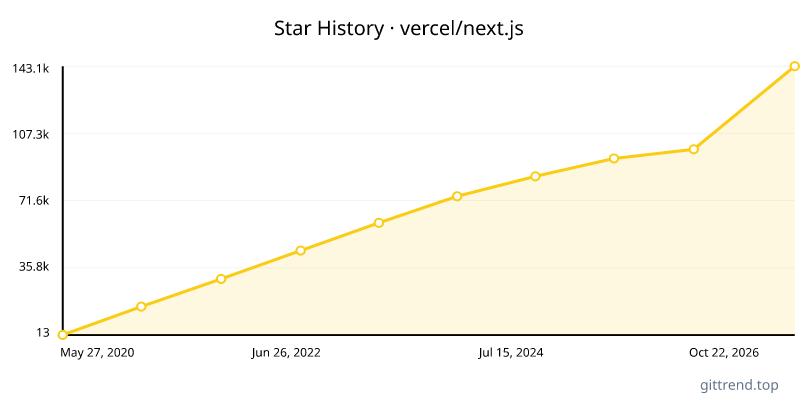
Overview
Next.js is the React Framework that enables you to create full-stack web applications by extending the latest React features with a production-ready, opinionated approach. It empowers developers to build performant, SEO-friendly, and highly scalable applications with a seamless developer experience.
Key Features
- Hybrid Rendering: Choose the best rendering strategy for each part of your application with Server-Side Rendering (SSR), Static Site Generation (SSG), Incremental Static Regeneration (ISR), and Client-Side Rendering (CSR) all supported.
- File-System Routing: Intuitive routing built into the framework, automatically mapping files in your
pagesdirectory to routes. - API Routes: Easily build API endpoints as part of your Next.js application, creating a complete full-stack solution.
- Image Optimization: Built-in, automatic image optimization for improved performance and Core Web Vitals.
- Fast Refresh: Instantaneous, reliable, and lightning-fast Fast Refresh, ensuring a productive development workflow.
- TypeScript Support: First-class TypeScript support for enhanced type safety and developer experience.
- Middleware: Run code before a request is completed to intercept and process requests, ideal for authentication, A/B testing, and more.
- App Router (Beta): A new paradigm for building React applications with advanced features like server components, layouts, and data fetching patterns.
Typical Use Cases
Next.js is ideal for a wide range of web applications, including:
- Marketing Websites: High-performance, SEO-optimized websites that load instantly.
- E-commerce Platforms: Scalable and secure solutions for online stores.
- Dashboards and Admin Panels: Rich, interactive applications with robust data handling.
- Server-Rendered Blogs and Content Sites: Delivering content quickly and efficiently to users.
- Full-Stack Applications: Building complete web experiences with integrated backend functionality.